Safety Solutions
Prevent catastrophic failures in automotive and industrial designs with ASIL-D certifiable technology and TCL1 compliance

Streamlined automotive, industrial safety solutions. ISO 26262 ASIL-D certifiable tech, ResilTech partnership. Reduce risk, enhance safety. Explore trusted product.
Overview
Safety in automotive and industrial designs is critical to prevent catastrophic failures that could result in serious injuries or loss of life. These systems often operate in unpredictable environments and deal with high-risk tasks. Ensuring robustness, reliability, and fail-safe operation mitigates these risks, protecting users and equipment.
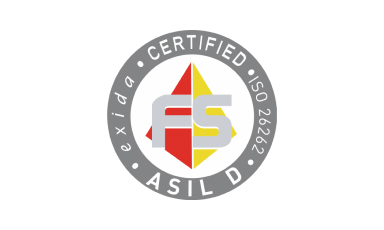
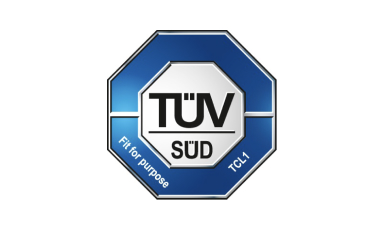
Across the design from OEMs through Tier 1 integrators, semiconductor, and software providers, the development processes and the resulting semiconductor designs must adhere to stringent safety requirements. There can be no weak link. As one critical pillar for semiconductor designs, Arteris NoC technology is ASIL-D certifiable, and we partner with our customers to achieve the appropriate ASIL certifications. The Arteris SoC Integration tools meet comprehensive TCL1 compliance following the ISO 26262 standard per independent evaluation by TÜV SÜD.
Key Benefits

Derisk Projects
Integrating existing designs and modular approach reduces safety integration complexity.

Standards Compliance
ISO 26262 certifiable NoC development streamlines compliance, saving time and effort in the certification process.

Power Efficiency and Optimized PPA
Arteris' interconnect IP solutions are designed to optimize the performance, power consumption, and cost of industrial systems.
Partner
Arteris and ResilTech have partnered to enhance SoC functional safety, specifically targeting ISO 26262 compliance. Arteris’s FlexNoC interconnect IP and ResilTech’s expertise and tools, along with the Arteris Resilience Package, create a comprehensive solution. This collaboration offers advanced interconnect technology and thorough resilience verification, reducing risk and accelerating the path to achieving ISO 26262 compliance for chip manufacturers.
Featured Product
Ncore is the only scalable, highly configurable, ISO 26262 certified cache coherent NoC for modern SoC designs.
- Any Processor
- Multiple Protocols
- Flexible Configuration
Maximize engineering productivity and accelerate time-to-market, saving 50+ person years over a DIY project.

Products

Certifications
At Arteris, our customers are our number one priority. We are committed to their ongoing success through the steadfast delivery of exceptional products that address today’s challenges and enable tomorrow’s greatest innovations.



- Certificate
- Presentations
- Fundamentals of ISO 26262 Part 11 for Semiconductors
- Challenges Adopting Fault Injection to Support Safety Analysis in Complex SoCs
- Automating the Generation of Scalable and Reusable FMEDA in Complex Systems-on-Chip (SoCs)
- ISO 26262 System-on-Chip (SoC) Safety Analysis for ADAS and AV
- ISO 26262: FMEA before FMEDA
- ISO 26262: What to Expect From Your Chip or IP Provider
- Lessons Learned Integrating AI/ML Accelerators into Complex ISO 26262 Compliant Systems-on-Chip
- Safety Considerations for Network-on-Chip (NoC) Development
- FMEDA Automation for Scalability and Reuse in Complex Systems on Chips (SoCs)
- Technical Papers
- Ecosystem